October 28, 2026 | AI News
OpenAI may be preparing to deepen its relationship with one of its biggest competitors.
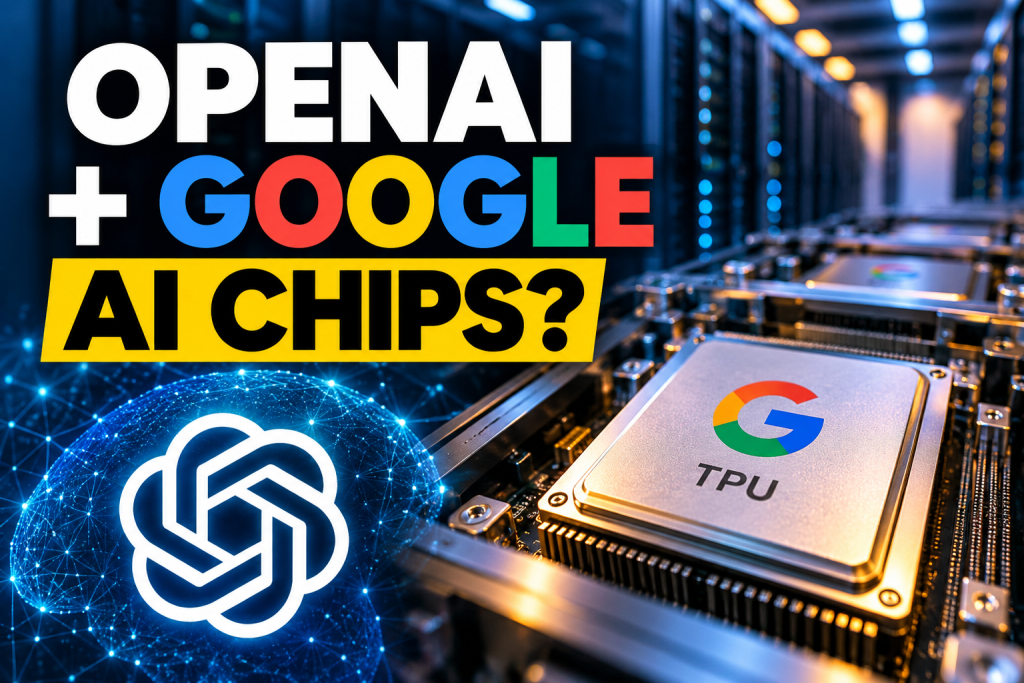
According to a Reuters report published on October 28, citing The Information, OpenAI is planning to purchase artificial intelligence chips developed by Google. The reported move could give OpenAI another way to access the computing power needed to run increasingly demanding AI systems.
Neither company has confirmed the reported purchase, and details of any potential agreement remain unclear.
Why Would OpenAI Buy Chips From Google?
Training and running advanced AI models requires enormous computing resources. Much of the industry currently relies on graphics processing units (GPUs) from Nvidia.
Google, meanwhile, has developed its own AI processors, known as Tensor Processing Units (TPUs). These chips are designed for machine learning workloads and could offer an alternative to traditional GPU-based infrastructure.
For OpenAI, expanding access to different types of processors could help diversify its computing infrastructure and potentially improve cost efficiency.
However, whether Google’s chips would deliver meaningful savings for OpenAI remains to be seen.
Competitors Are Becoming Infrastructure Partners
The reported plan highlights an unusual feature of the AI industry: companies that compete directly for users can also depend on one another behind the scenes.
OpenAI develops ChatGPT, while Google offers its own Gemini AI products. Yet the companies already have a growing cloud infrastructure relationship.
Reuters reports that OpenAI began renting Google’s AI chips in 2025. A direct purchase, if confirmed, would represent another step in that relationship.
This does not mean the companies are abandoning their rivalry. Instead, it illustrates how access to computing power has become a priority across the industry.
What Could This Mean for AI Users?
Most ChatGPT and Gemini users would not notice an immediate difference if the reported purchase goes ahead.
Over time, however, greater access to AI computing infrastructure could help companies expand capacity, support new features, and manage the costs of serving millions of users.
That matters because the price and availability of computing resources influence how quickly AI companies can develop and deliver their products.
Still, any benefits for consumers remain uncertain until more details emerge.
The Bigger Picture
The race to build AI infrastructure now involves chipmakers, cloud providers, and AI developers investing heavily in computing capacity.
Google’s TPUs are becoming a more prominent part of that competition, while OpenAI continues working with multiple technology partners.
The reported chip purchase is another sign that the future of AI may depend as much on infrastructure decisions as on the models themselves.
Bottom line: OpenAI reportedly wants to buy Google’s AI chips, but the deal has not been confirmed. If it proceeds, it could illustrate how the AI industry’s fiercest competitors are increasingly connected through the infrastructure powering their products.
Source: Reuters, October 28, 2026 — OpenAI plans to buy Google’s AI chips, The Information reports.
About Radavora: We cover AI news, independent tool reviews, comparisons, and practical guides to help readers make informed decisions.